- Home
- Rustic Christmas Crafts
- Rustic Christmas Angel
Jacki Cammidge is a Certified Horticulturist and rustic garden artisan with 30+ years creating twig trellises, archways, and hypertufa pieces from natural materials.
Rustic Christmas Angel
Your Prim Holiday Decor
My stash of old bits of spindles, turned pieces and rusty scrap is all coming in handy for my one of a kind Rustic Christmas Angels. Nothing says 'primitive' more than a collection of the most Christmassy motifs of all; angels.
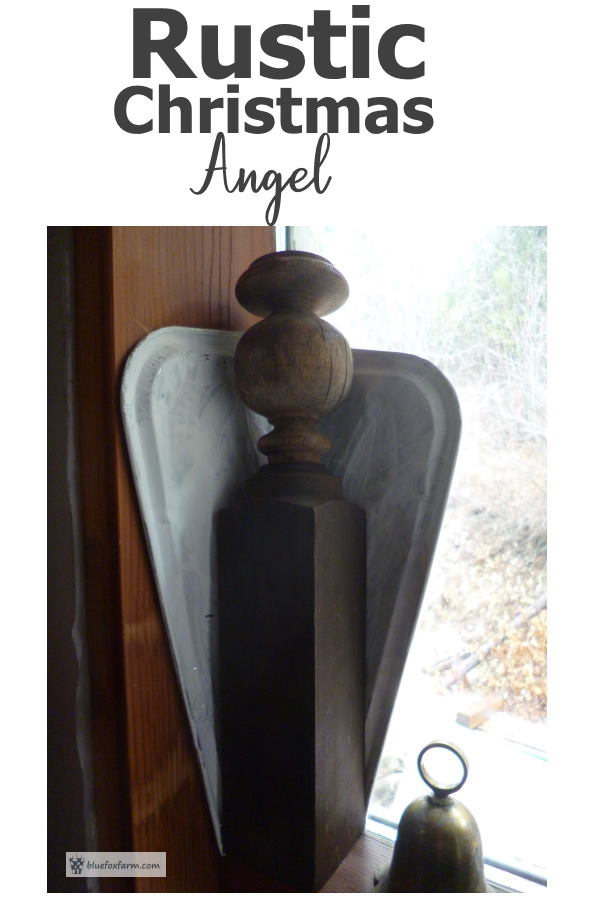
Browsing through offcuts from other projects, bits of rusty metal from my Junking in July road trip, and other scraps that never found a home and ended up in the 'project resource' pile gives me enough to start with.
Fortunately, I never throw anything out - even if it has bad memories, like the time I assumed that my instructions were clear.
Enough time has gone by that I can let it go, and use the damaged pieces to advantage in a project.
I keep my supplies in a cupboard specifically for that purpose, and it's off limits to those that don't have the hoarding tendency. Other people who don't see the value of all my bits and bobs could potentially clean it up, thinking it's garbage.
Trying to organize it all is another matter entirely. What category would old spindles go into?
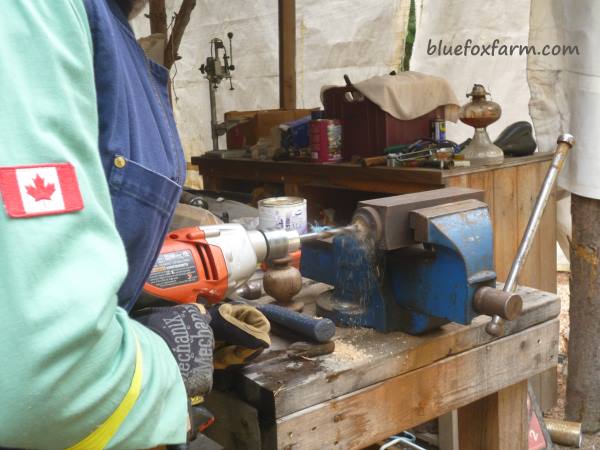 Part of a spindle left from another project, in the hands of the master carpenter
A while ago I messed with the method of making some faux tin ceiling tiles. What a good way to make the wings! And I also discovered that you can paint the aluminum so they're shabby white.
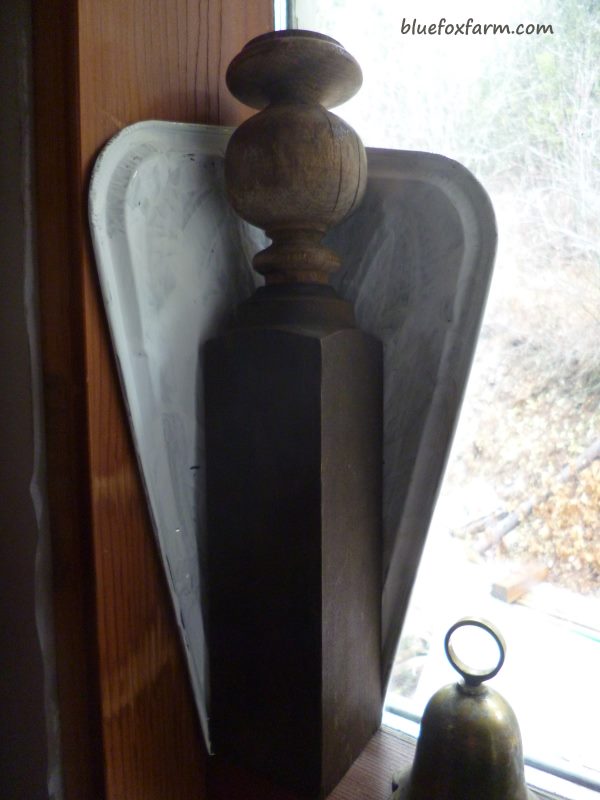 Rustic Christmas Angel displayed with a silver bell
The combination of the pieces is now assembled, with only a few revisions.
I think it's one of those cases where the whole is more than the sum of the parts. Stay open to the potential, and put things together that may not seem to be related at all. And whatever you do, don't toss those left over bits from your other projects, they just might come in handy at a later date.
If you see a collection of rustic angels on the mantel, or a shelf, they might just give you that incredible feeling of nostalgia.
They will be something that will be stored the rest of the year and brought out close to the season to enjoy the poignancy of an old fashioned Christmas.
You might like these
Holiday Decorating Ideas - Country Rustic Christmas
Holiday Decorating Ideas; country rustic Christmas with primitive ornaments and accents...
Copper Wire Stars - simple yet effective accessory & accent
Copper Wire Stars can add a rich accent to crafts like weedy wreaths, or make a line of them to hang in a window or dress up a bare wall or fireplace mantel...
How to Make a Primitive Angel - diy tutorial
How to Make a Primitive Angel to display as garden or porch decor - all you need are a few scraps and thrift store finds...


 Jacki Cammidge
AUTHOR BIO
Jacki Cammidge is a Certified Horticulturist with a diploma in Ornamental Horticulture and the rustic garden artisan behind Woman of Many Sticks. Over 30+ years, she built custom twig trellises, archways, clematis gazebos, and 100+ hypertufa pieces using natural materials and upcycled finds. See her work on Facebook and Pinterest. Now retired, she still loves growing and harvesting willow.
If you're curious how broken pots, twigs and wire combine into magic, let's explore creativity in action.
Fill in the form below for your copy;
(Don't be disappointed - use an email address that will accept the free download - some .aol email addresses won't.
If you don't see your download within a few minutes, try again with another email address - sorry for the bother.)




Popular Posts You Can't Miss

Woman of Many Sticks - find out why I'm called that...
Join my e-mail group;
Sign up for the Rurality Newsletter here: (click on the bucket!)
Blue Fox Farm Home | About Me | Contact Me | Site Map | Privacy Policy | Copyright
Copyright © 2002- BlueFoxFarm.com All rights reserved

We acknowledge the traditional owners and custodians of the lands on which we live and work and pay our respects to elders past, present and future. Our business is created on the Mi’kmaq lands we call Epekwitk.